
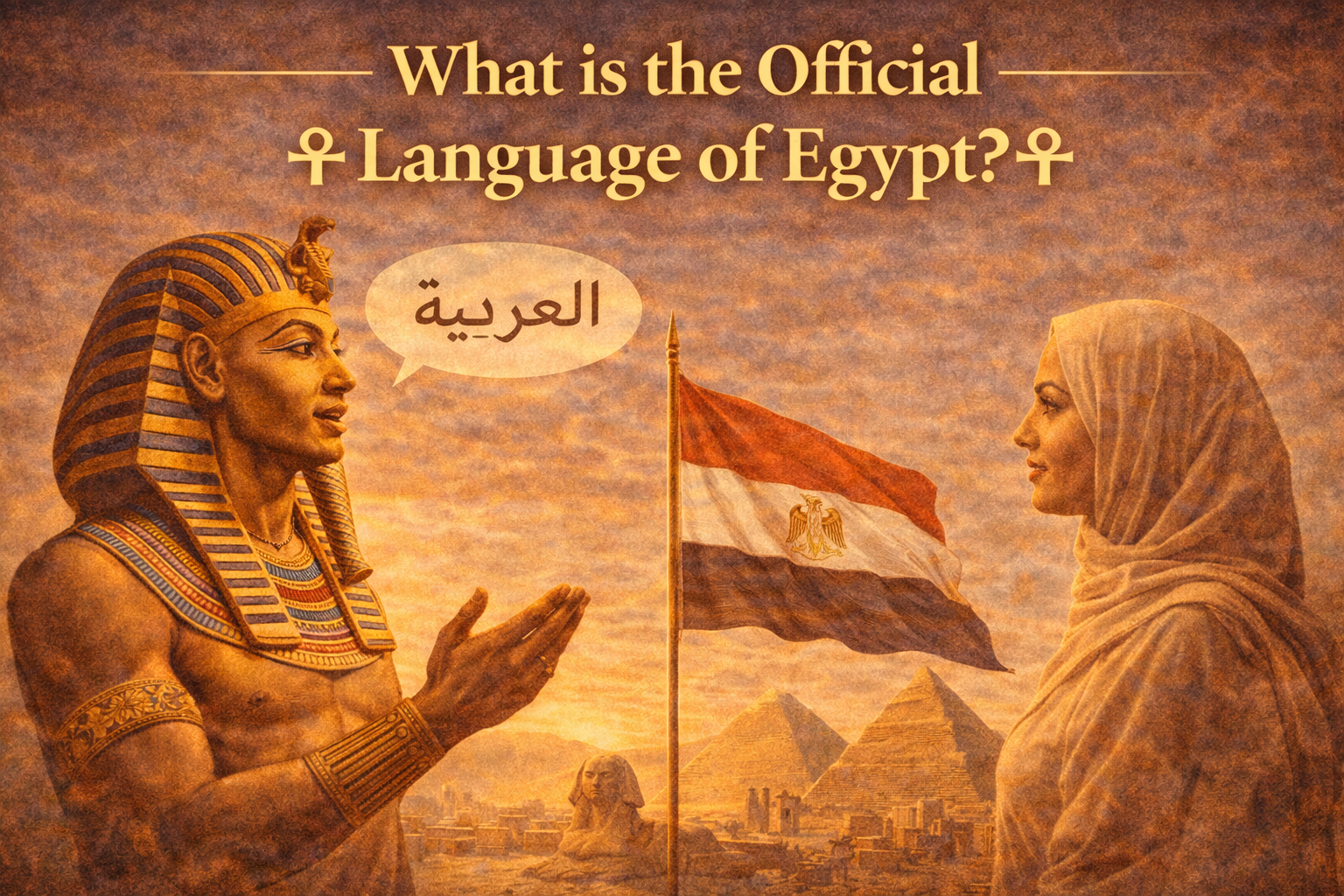
Modern Standard Arabic is the official language spoken in Egypt. It is commonly used in education, government, and media. However, the most common spoken dialect is Egyptian Arabic. In this blog post, we’ll discuss the linguistic landscape of Egypt. Let’s get started:
What Language Do Egyptians Speak?
The main spoken language is Egyptian Arabic, while the official language of Egypt is Modern Standard Arabic. Egyptian Arabic is used in daily life, film, and media. There are many other languages spoken in Egypt.
What is the Official Language of Egypt?
When it comes to the primary language spoken in Egypt, we’ll talk about Modern Standard Arabic (MSA). It is:
- Used in literature, official documents, news broadcasting, and formal speeches.
- Taught at schools and used in written communications.
Egyptian Arabic is the most spoken dialect in daily life.
- It has slang, expressions, and pronunciation that are not applied to any other Arabic dialect.
- It has the influence of Coptic, the ancient Egyptian language, plus Turkish, English, and French because of historical interactions.
Other languages:
- English is a commonly used language for tourism, business, and education, primarily among the educated and urban classes.
- Some Egyptians also know other languages, like French, due to historical association. Coptic is no longer used as a spoken language, although it is still maintained as a liturgical language in the context of the Coptic Orthodox Church.
Linguistic background:
- Coptic was the last stage of the Ancient Egyptian language, the last native language of Egypt before the Arab conquest in the 7th century CE.
- After the Arab conquest, Coptic became the only relic of the past used in a religious context, while Arabic swiftly made its way into the public domain.
What are the Top 3 Languages in Egypt?
Here are the most spoken languages in Egypt:
-
Egyptian Arabic
Egyptian Arabic is the main dialect spoken all over Egypt. It has regional versions called Saidi Arabic, Alexandrian Arabic, and Cairene Arabic. Bedouin Arabic is spoken by Bedouin communities in the Sinai Peninsula and the Western Desert.
-
Foreign Language: English, French, Italian, and Armenian
English, another commonly used language in Egypt, is considered a second language, especially among the urban and educated populations. It is primarily used in tourism, business, media, and education. French is also used in Egypt, which acts as historically representative during the 19th and early 20th centuries because of the French influence. The Italian and Armenian languages are used by small communities of Italians and Armenians, primarily used in Alexandria and Cairo.
-
Minority Languages
The Nubian community in southern Egypt uses the Nubian language. It is categorized into two major dialects: Nobiin and Kenzi. It is from the Nilo-Saharan family of languages. The Beja language is spoken by the Beja in the southeastern desert areas. The Domari language is spoken by the Dom community. The Siwi language is spoken by the Berber community in the Siwa Oasis near the Libyan frontier.
Is English Widely Spoken in Egypt?
When it comes to foreign languages spoken in Egypt, English would be at the top of the list. It is the most widely spoken foreign language in Egypt. Around 40% of Egyptians know the English language, which is taught in schools and widely used in tourism, higher education, business, media, and government, making it the second most common language for many Egyptians, especially in urban areas.
How is Modern Standard Arabic Different from Egyptian Arabic?
Arabic is most commonly used in official communication and serious media in the Arab world. On the other hand, Egyptian Arabic consists of many local words, and pronunciation is quite different as well.
Do people still use the Coptic language in Egypt?
People don’t use the Coptic language in daily life, but it survives as a liturgical language of the Coptic Orthodox Church.
What is the History of Ancient Egyptian Language?
Time Period |
Language Phase |
Key Features |
Writing systems used |
|
c. 2600–2000 BCE |
Old Egyptian |
Used in monumental inscriptions and religious texts |
Hieroglyphs, Hieratic |
|
c. 2000–1350 BCE |
Middle Egyptian |
Used in religious texts, literature, and official inscriptions |
Hieroglyphs, Hieratic |
|
c. 1350–700 BCE |
Late Egyptian |
Used in personal and administrative documents |
Hieratic, Demotic (later) |
|
c. 700 BCE–300 CE |
Demotic |
Used for administrative, legal, and literary purposes |
Demotic |
|
c. 300 CE–17th Century |
Coptic |
Included Greek letters into its script and added vowels |
Coptic script (Greek + Demotic) |
|
Post-641 CE |
Arabic Domination |
It replaced Coptic as the written and spoken language after the Islamic conquest. |
Arabic |
Final Thoughts
Modern Standard Arabic (MSA) is the official and formal language, while Egyptian Arabic is used in informal communications. The existence of two languages represents the rich legacy of Egypt. We hope you enjoyed the blog. Continue reading our blogs on such topics. If you are interested in visiting Egypt while exploring beautiful ancient places, make sure to get in touch with the best tour operator in Egypt, like Pyramids Trip.
Other Useful Links
What’s Under the Pyramids of Giza?